
ERP implementation cost can vary widely because every business has different users, modules, data and training needs.
For SMEs, the safest approach is to start with the highest-value workflows and avoid over-complicating the first rollout.
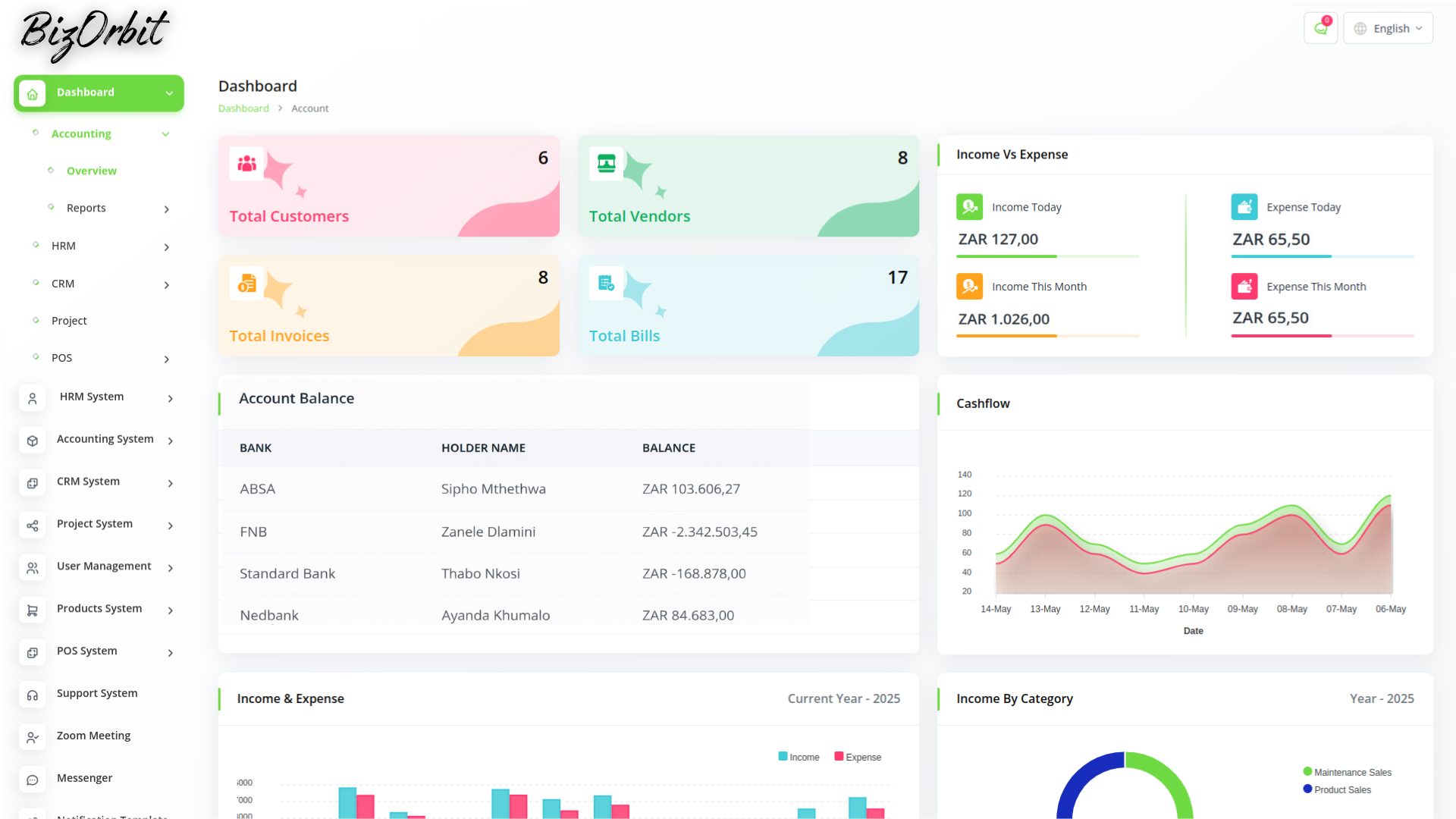
BizOrbit is designed to help South African businesses start with practical day-to-day workflows, then add more advanced modules over time.
What usually affects ERP cost
The main cost drivers are number of users, modules, data migration, custom setup, training, reporting and support.
Complex approval rules or custom integrations can also increase rollout time.
How SMEs can keep implementation simple
Start with customers, quotes, tax invoices, payments, suppliers, expenses and reports.
Once the team is comfortable, add CRM, stock, HR, payroll, projects, marketing and compliance workflows.
Why adoption matters
A cheaper system is expensive if nobody uses it properly.
Choose software with clear navigation, familiar wording and workflows staff can learn without heavy consulting.
Where BizOrbit helps
BizOrbit brings accounting and finance, invoicing, HR and payroll, CRM, project management, inventory, POS, dashboards and reporting into one business management platform.
Frequently asked questions
How much does ERP implementation cost in South Africa?
It depends on users, modules, data migration, training and support. SMEs can reduce cost by starting with core workflows first.
What is the hidden cost of ERP?
Hidden costs often come from poor data cleanup, unnecessary customisation, lack of training and staff not adopting the system.
Can BizOrbit start small?
Yes. BizOrbit can start with core business workflows and expand into AI, marketing, compliance, SEO, HR, projects, inventory and POS.