
Sales Pipeline Software South Africa is an important search topic for South African SMEs that want simpler operations and better visibility.
This guide explains what to look for, why local business wording matters, and how a connected platform can reduce admin work.
The business problem
Most small businesses outgrow spreadsheets before they realise it. Customer records live in one place, quotes in another, payments in bank statements, staff information in folders and reporting happens late.
The best software for this topic should reduce duplicated capturing, keep daily work visible and make it easier for owners to understand what needs attention today.
What to look for
Look for software that supports daily workflows, not only month-end reporting. A good system should help people create records, follow up, update status and report without needing a complicated implementation project.
The right platform should connect customers, quotes, tax invoices, payments, suppliers, staff, projects, documents and reports so the team can work from one source of truth.
South African requirements
South African SMEs often need local wording around tax invoices, VAT, PAYE, UIF, CIPC, COIDA and POPIA. Generic international wording can slow teams down because staff need to translate what the system means.
Clear local language makes software easier for owners, finance teams and admin staff to adopt. It also helps when accountants, managers and team members need to review the same information.
Questions to ask before choosing software
Ask whether the system supports your current workflow, your next stage of growth and your reporting needs. Also check whether users can learn it quickly and whether the pricing makes sense for a small South African team.
For finance-led businesses, check tax invoice wording, VAT visibility, customer balances, supplier balances and payment tracking. For operational teams, check projects, stock, staff, documents, reminders and dashboards.
How BizOrbit helps
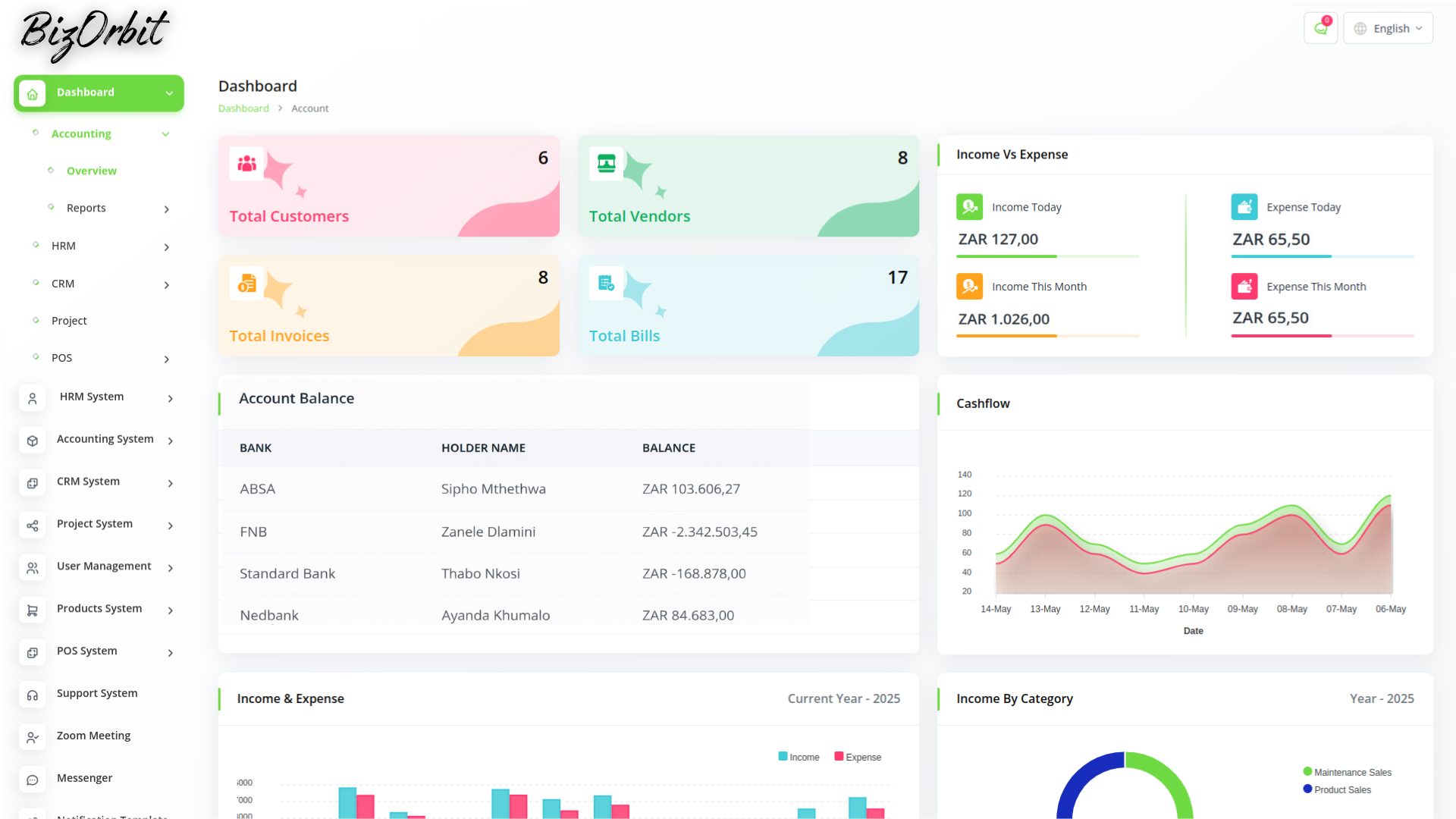
BizOrbit combines accounting and finance, invoicing, CRM, HR/payroll workflows, projects, inventory, POS, dashboards, reporting, compliance reminders, marketing and AI Assistance.
The goal is to help teams run the day from one place instead of switching between disconnected tools. BizOrbit is especially useful when a business wants practical ERP capability without the heavy enterprise feel of older systems.
Recommended next step
Start with one workflow that causes the most admin pain, such as quotes to tax invoices, expenses, customer follow-ups, stock visibility or project deadlines. Then add the connected modules once the team is comfortable.
If you are comparing options, book a demo and test the exact tasks your team performs every week rather than only reviewing a feature list.
Where BizOrbit helps
BizOrbit brings accounting and finance, invoicing, HR and payroll, CRM, project management, inventory, POS, dashboards and reporting into one business management platform.
Frequently asked questions
Is this relevant for South African SMEs?
Yes. This guide focuses on practical South African SME workflows, local terminology and everyday business operations.
Can BizOrbit support this workflow?
BizOrbit supports finance, invoicing, CRM, HR, projects, inventory, POS, compliance reminders, marketing, dashboards, reporting and AI Assistance.
Can I start free?
Yes. You can register free or book a demo to see the relevant workflow in BizOrbit.
What should I compare before choosing business software?
Compare local fit, ease of use, finance workflows, reporting, staff permissions, integrations, support, total monthly cost and whether the system can grow with the business.